Research
Data Collection
Data Analysis
IDeation
Approach
Primary Research
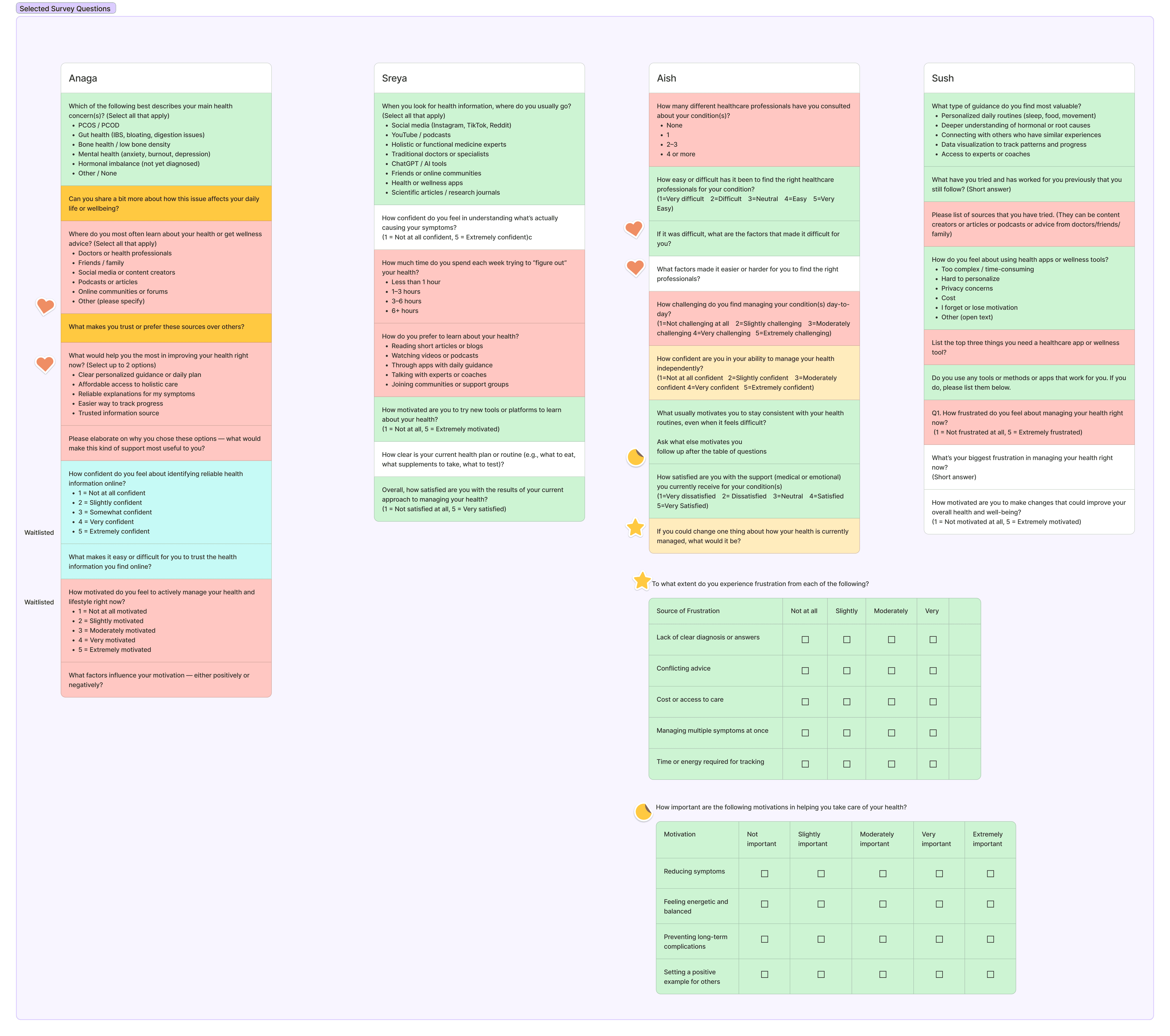
We aimed to uncover real-world pain points, motivations, and behaviors of women managing chronic and hormonal health conditions. We sought to understand how they navigate fragmented care, what kind of guidance would truly support them in managing their health holistically.
Surveys
41
Responses
12
Consented for interviews
Insights
The survey revealed that women experience significant information overload, conflicting advice, and frustration with fragmented care while managing multiple chronic conditions.
It also showed a strong desire for trustworthy, personalized, and low-effort digital tools that help them understand their health more holistically.
Interviews
13
Interviewed
4
Consented for Diary Study
Insights
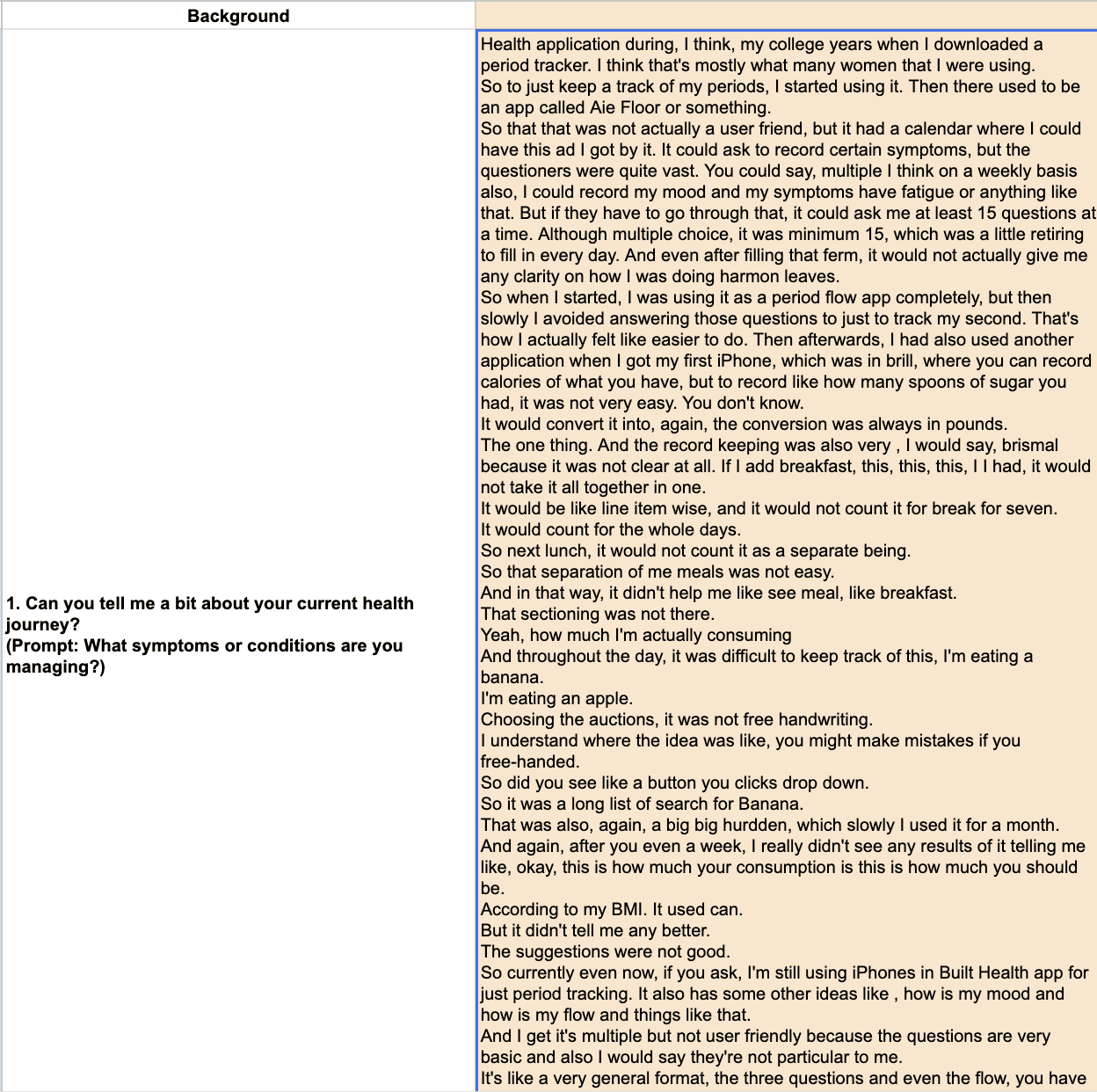
The interviews revealed that women are not just looking for symptom tracking, but for clarity, validation, and a deeper understanding of the “why” behind their health patterns.
They emphasized the need for trustworthy, personalized guidance that feels empathetic, low-effort, and supportive rather than overwhelming or clinical.
DIary STudies
4
Participants
Insights
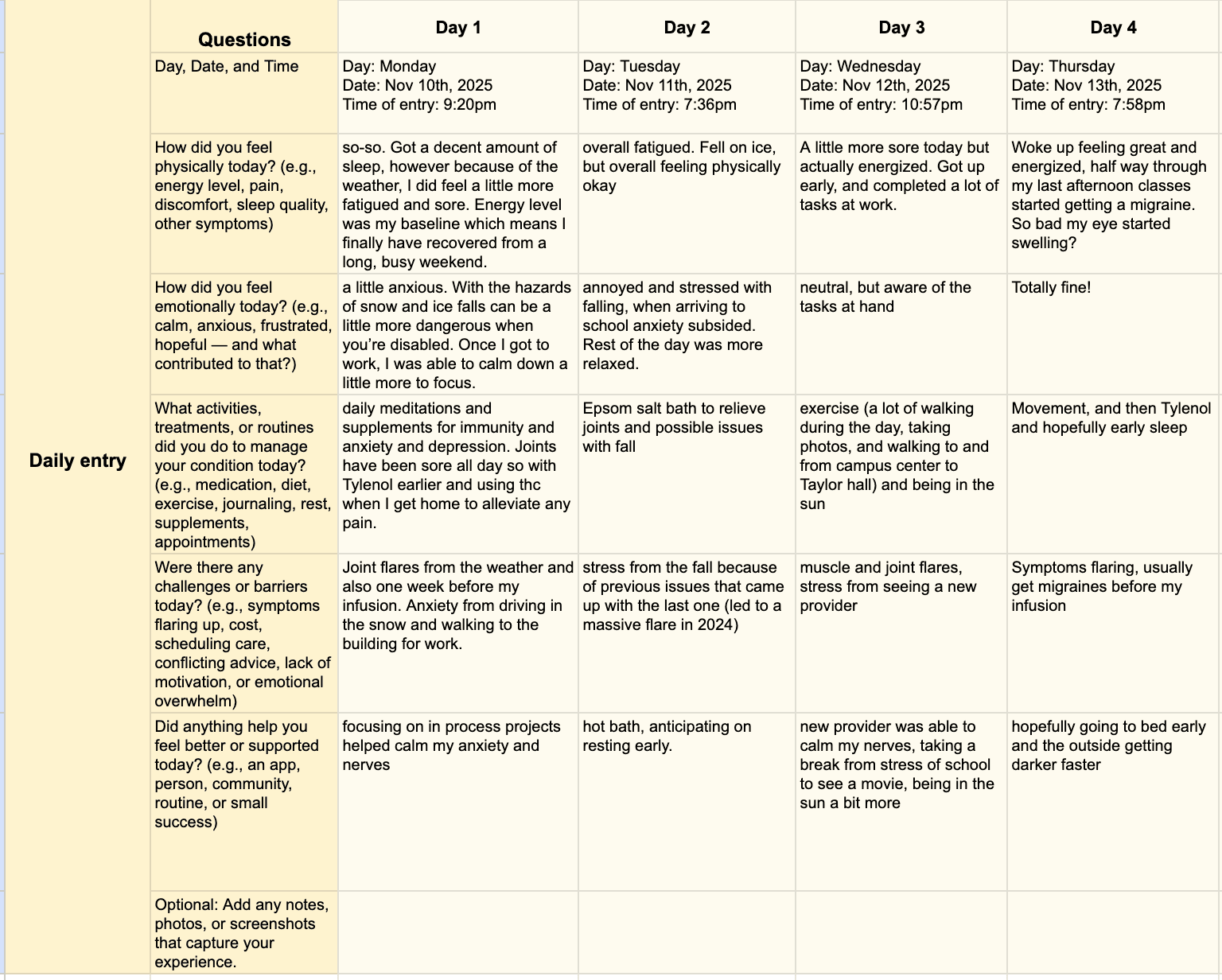
Diary studies revealed that women’s health behaviors are cyclical and closely tied to daily energy, mood, and symptom fluctuations rather than fixed routines.
They also showed that users need lightweight, contextual support that adapts to real-life disruptions instead of rigid tracking systems.
Fragmented Care Systems
Narrowly Focused Digital Tools
Trust in Data
Addressing Emotional and Social Context
THE Problem SPace
Women’s healthcare experiences are fragmented across medical, emotional, and lifestyle domains. Most digital health solutions focus on isolated symptoms or specific life stages (such as fertility or pregnancy), rather than supporting holistic, lifelong wellness. This disconnect makes it difficult for women to understand how hormonal health, mental wellbeing, chronic conditions, and daily habits intersect leaving them without accessible, integrated support.
The solution
Delivering a holistic, AI-powered women’s health platform that transforms fragmented care into a connected, empowering experience. By unifying symptom tracking, lifestyle insights, emotional support, and evidence-based guidance in one intuitive space, the app helps women move from confusion to clarity.
How does it help women?
Where Care Meets Understanding
Creating a holistic approch for women’s health that bridges fragmented care experiences by integrating medical, emotional, and lifestyle support into one accessible platform.
Timeline
8 Months
Tools Used
Figma, Adobe Creative Cloud, Google Drive, Claude
Industry
Healthcare/Tech
Team & Role
Team of 4
UX Design & Strategy
Secondary Research
We conducted a literature review of academic journals, medical publications, and credible grey literature, along with a competitive analysis of existing women’s and holistic health platforms.
Key Insights
1
Women's health should be holistically approched integrating hormonal, lifestyle, emotional, and preventive care.
2
Many digital health tools are narrowly focused on single systems (e.g., cycle, fitness, gut health), creating fragmented user experiences.
3
Trust, credibility, and transparency are critical in women’s health platforms due to widespread misinformation and systemic dismissal.
4
Technology is most effective when it translates complex medical data into simple, actionable, and personalized guidance.
Data Analysis
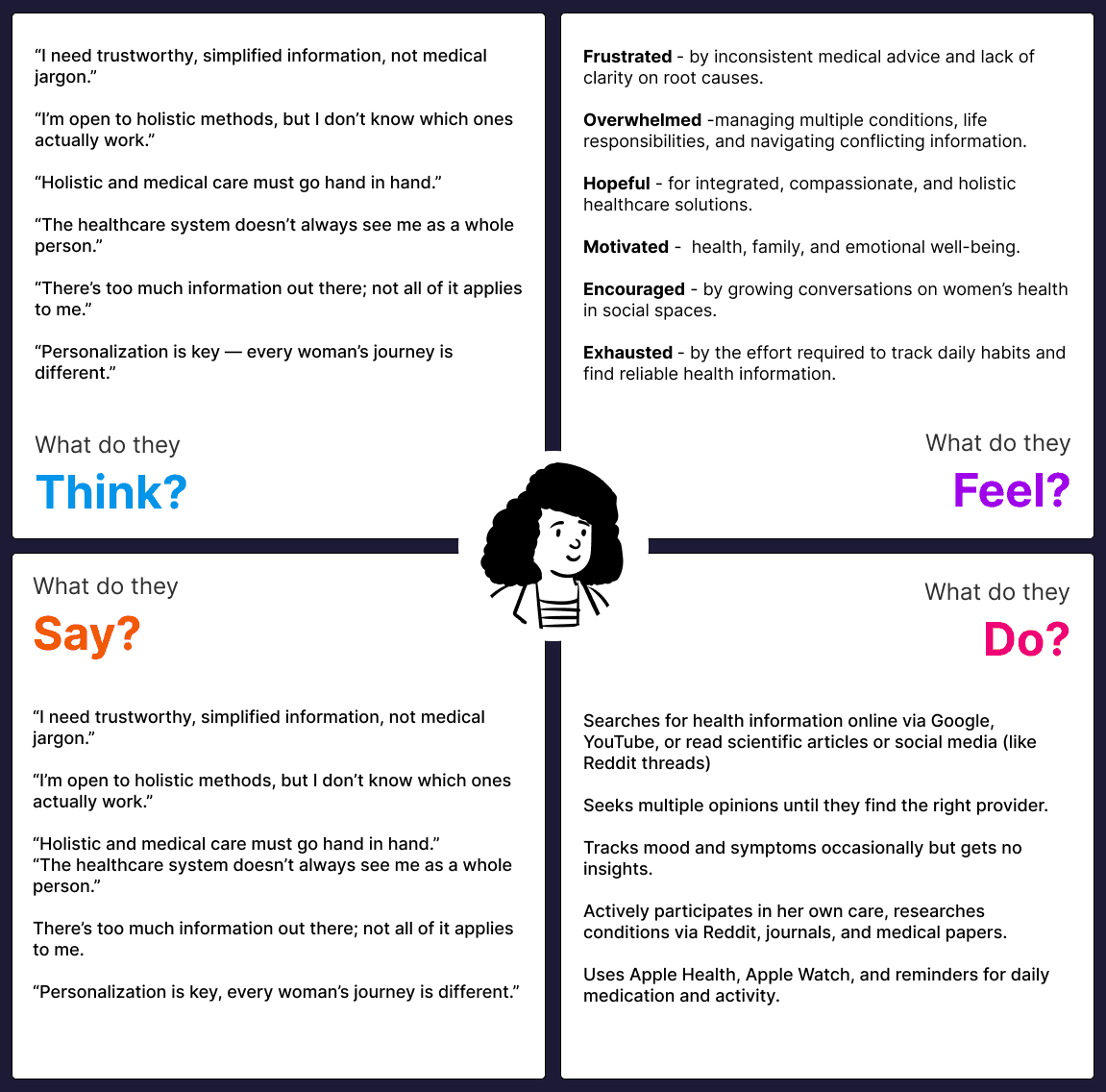
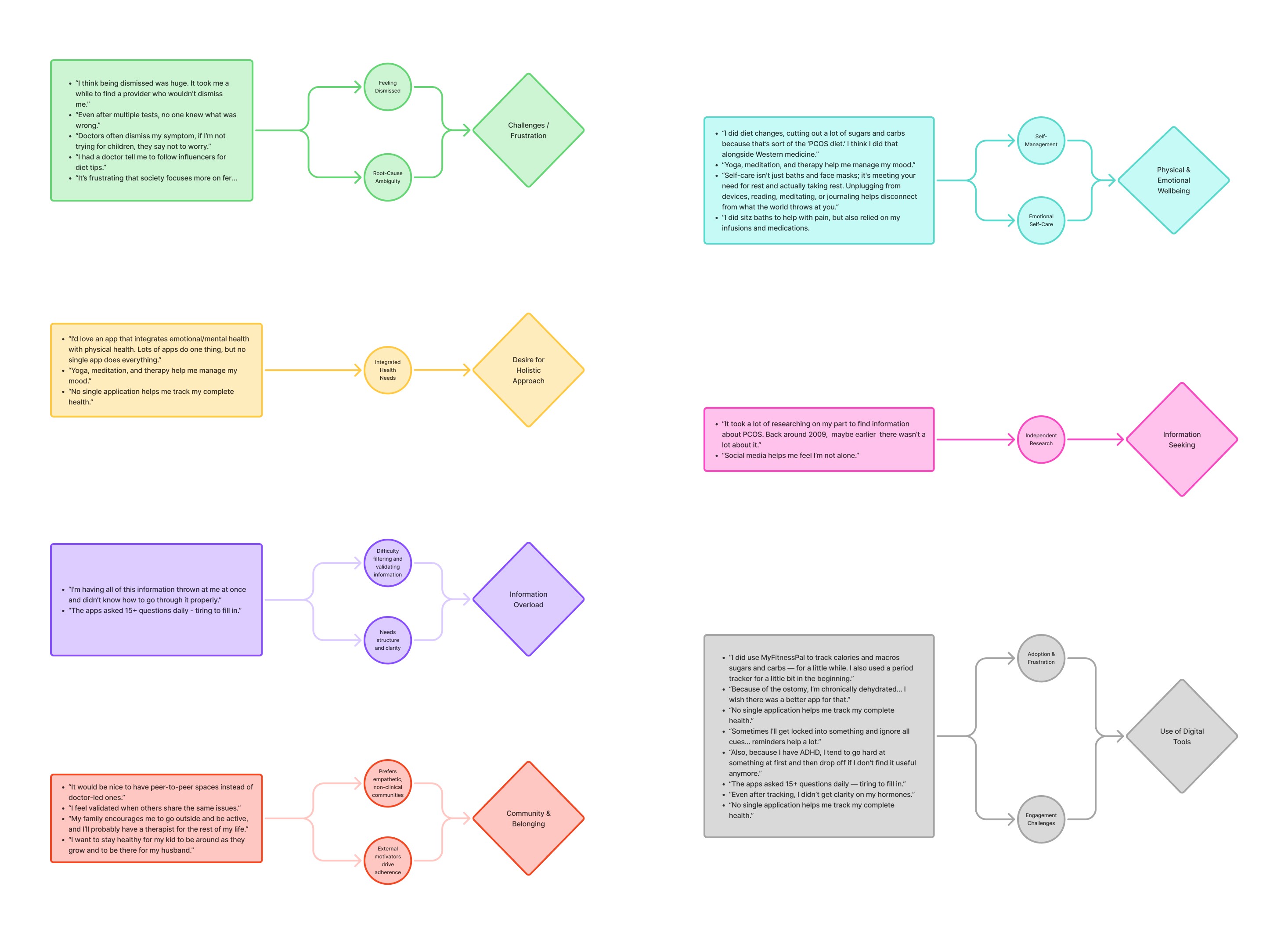
Analyzed quantitative survey data to identify behavioral patterns and key pain points, and conducted thematic analysis on interviews and open-ended responses to uncover deeper insights.
Thematic Analysis
Empathy Map
Affinity Mapping

Key Features based on Analysis
The analysis revealed that women struggle with fragmented care, information overload, and low motivation due to high-effort tracking tools. It highlighted a strong need for trustworthy, holistic, and low-friction support that helps them understand their health patterns rather than just track symptoms.
Want to explore the full project? I’d love to connect.
Ideation & Strategy
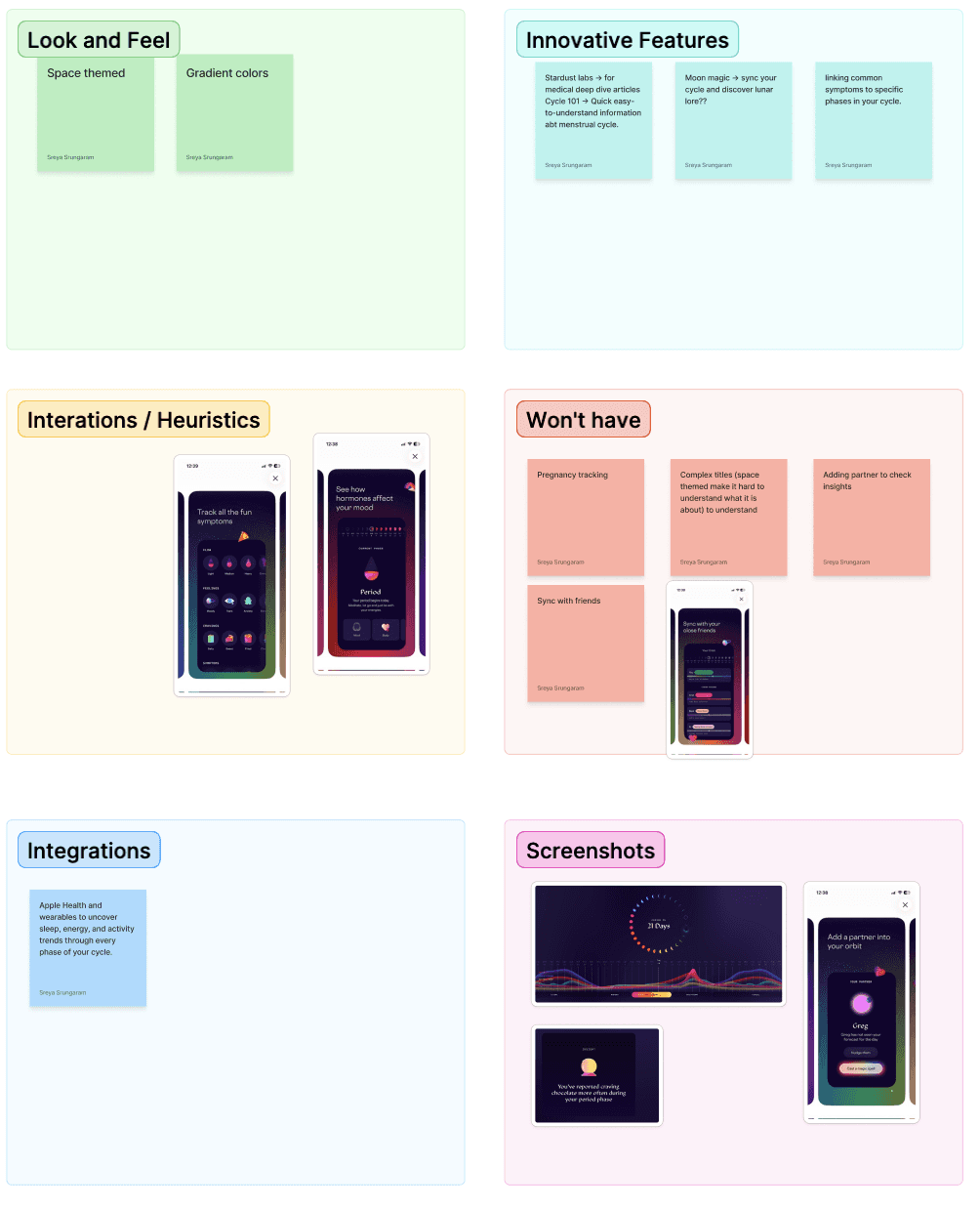
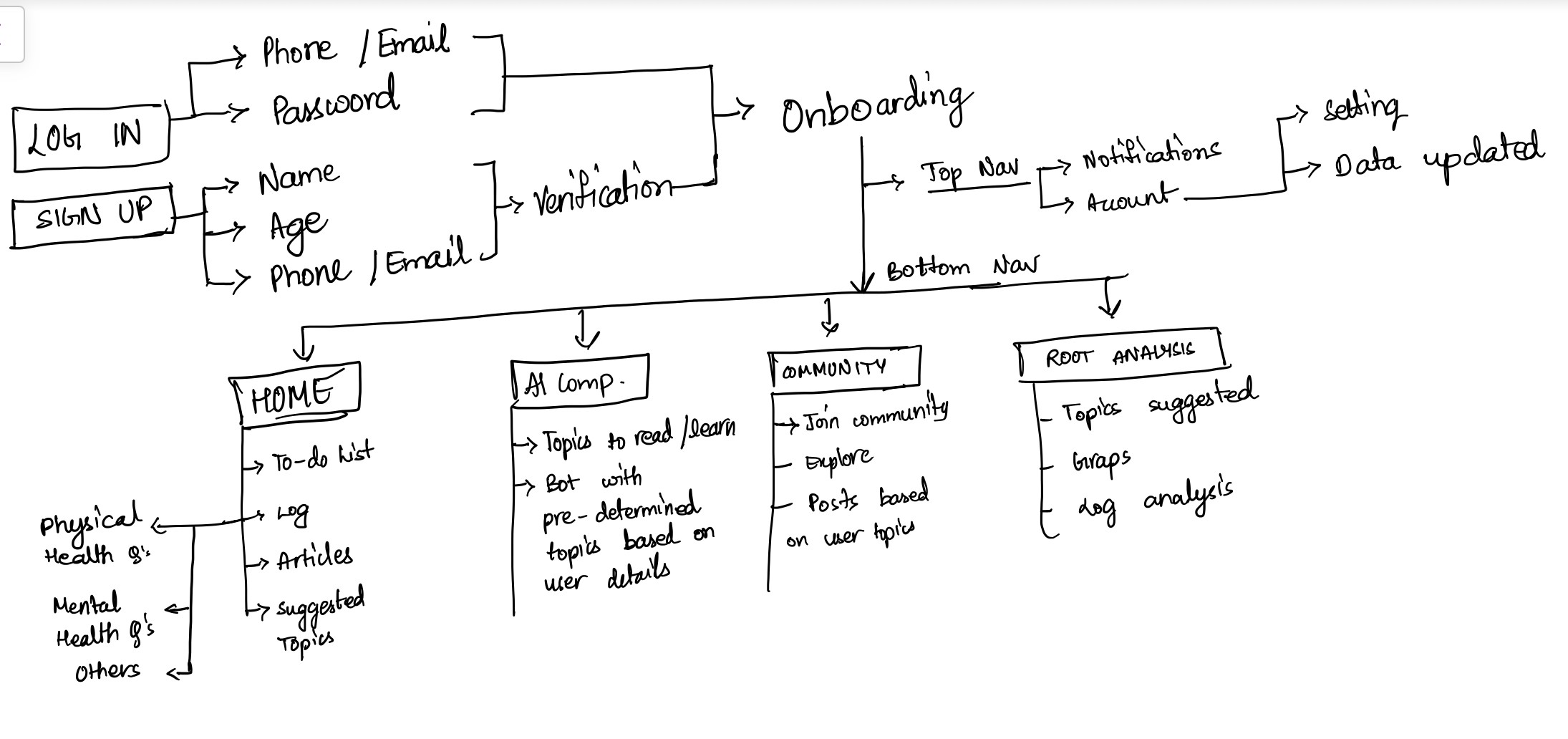
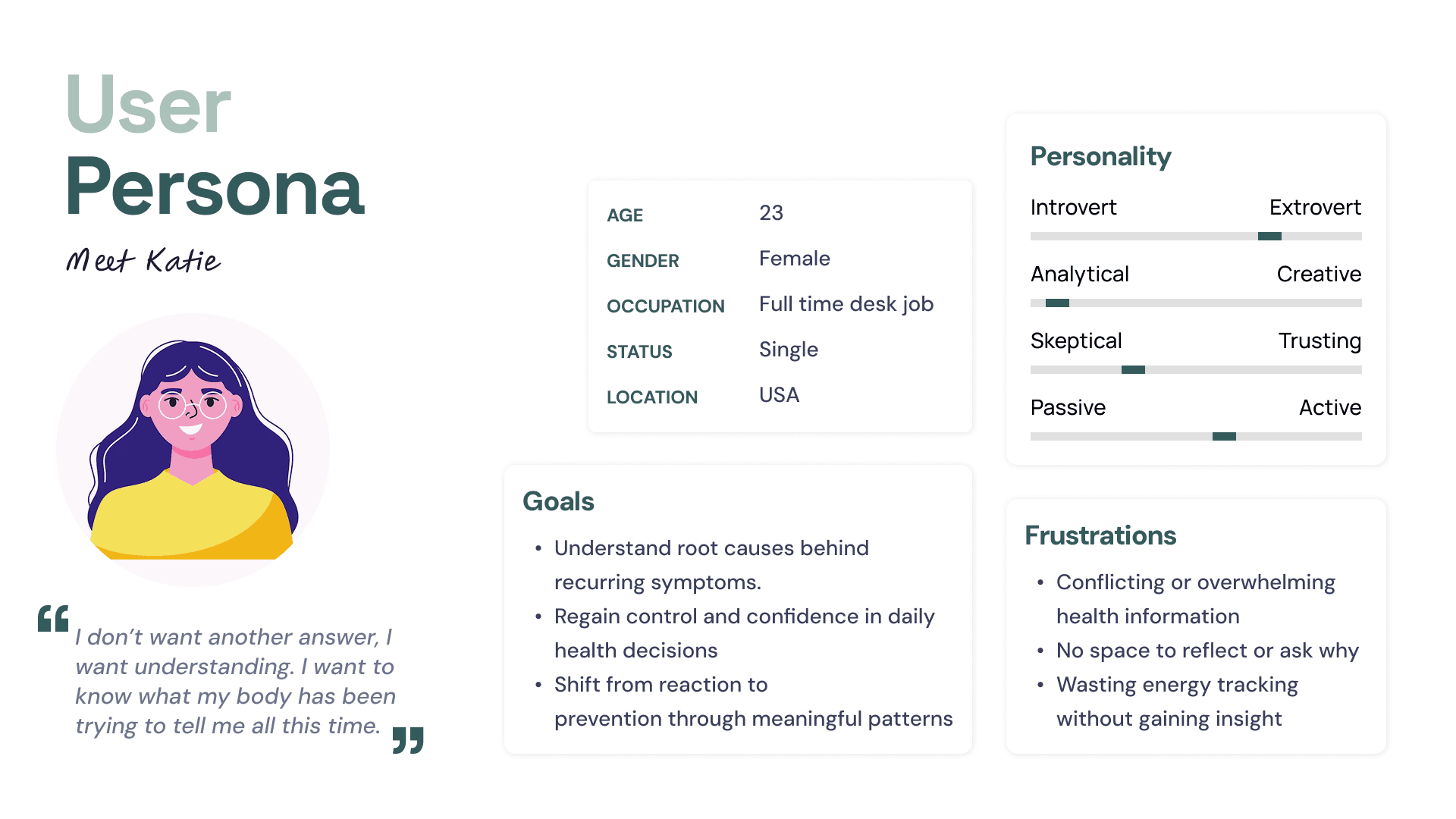
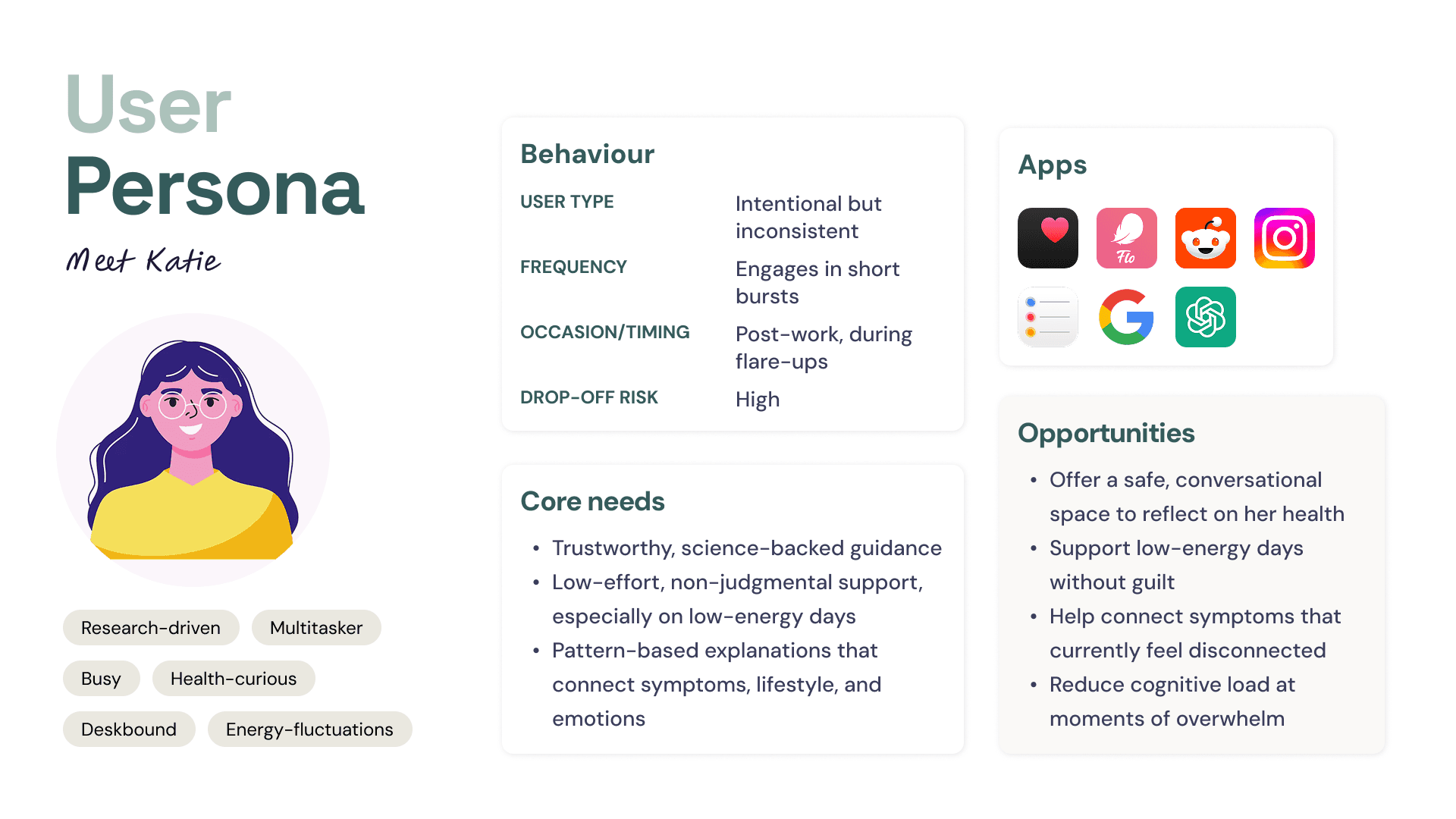
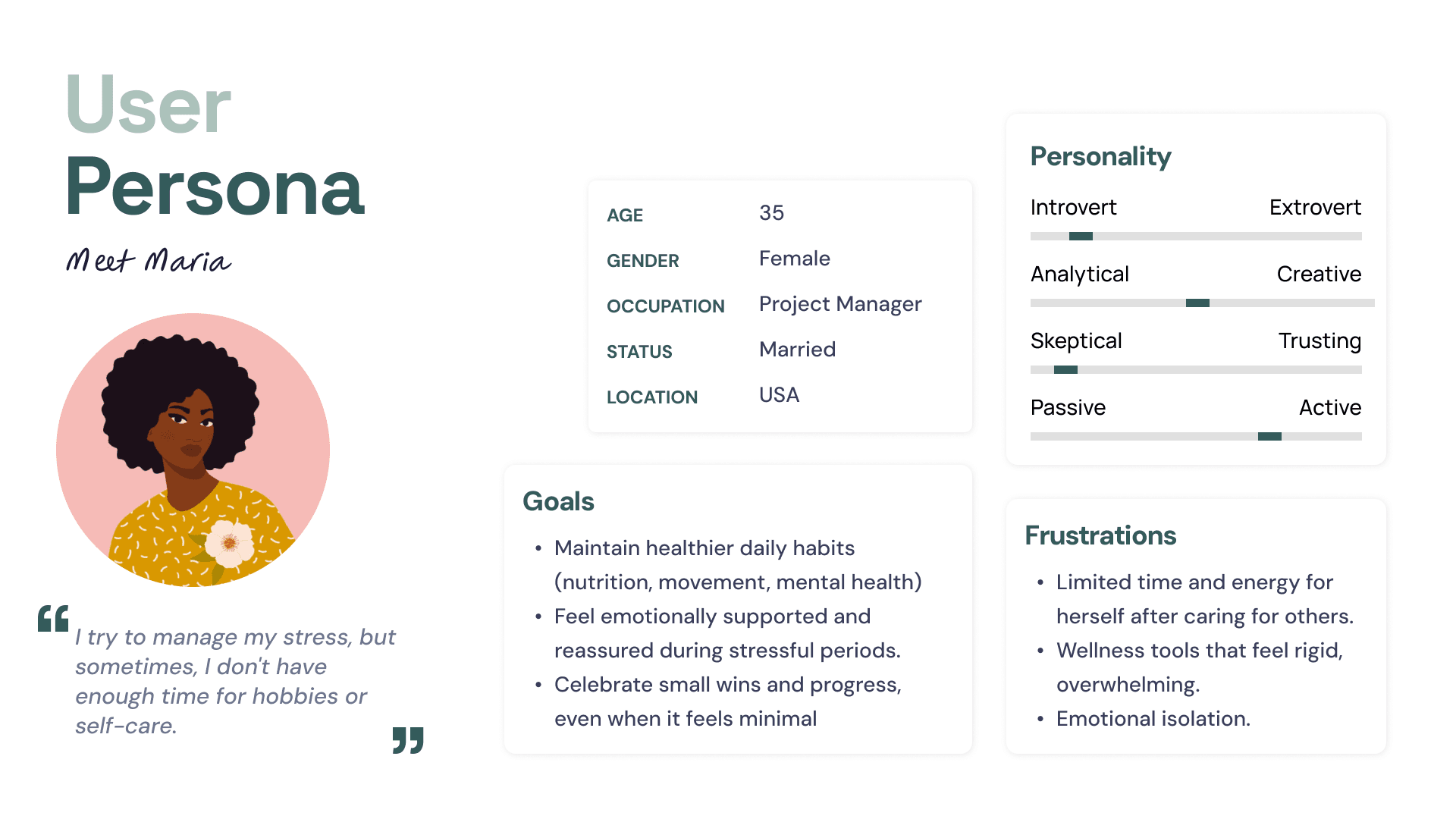
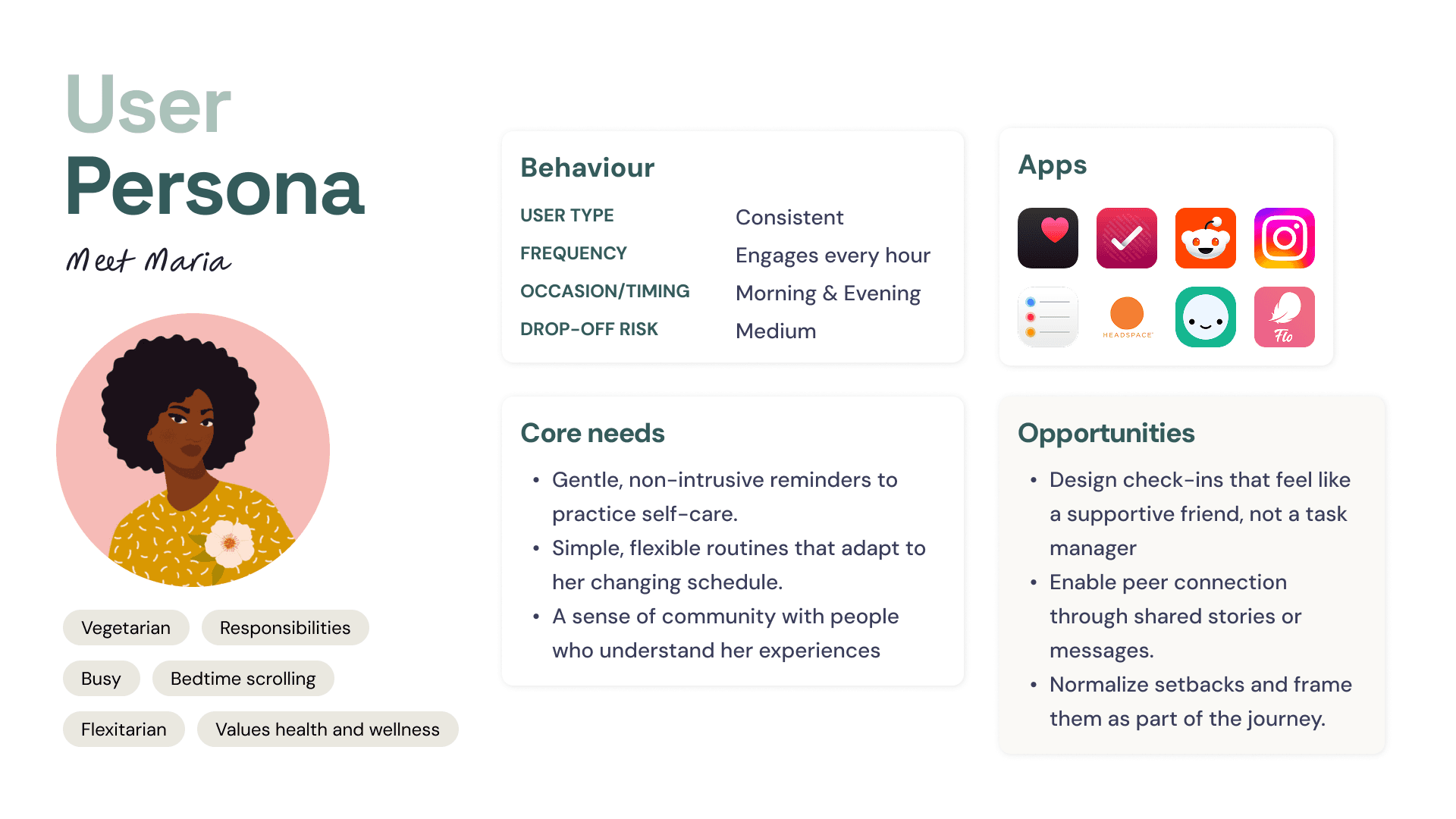
For the next steps in developing the platform, we focused on translating key research insights into actionable features. We also designed the navigation flow to ensure clarity and intuitive movement across the app.
The Design Journey
Features decided on
Sketches
Root-Cause Analysis
Symptom & Mood Tracking
AI-Powered Pattern Insights
Personalized Daily Routines
Progress & Trend Visualization
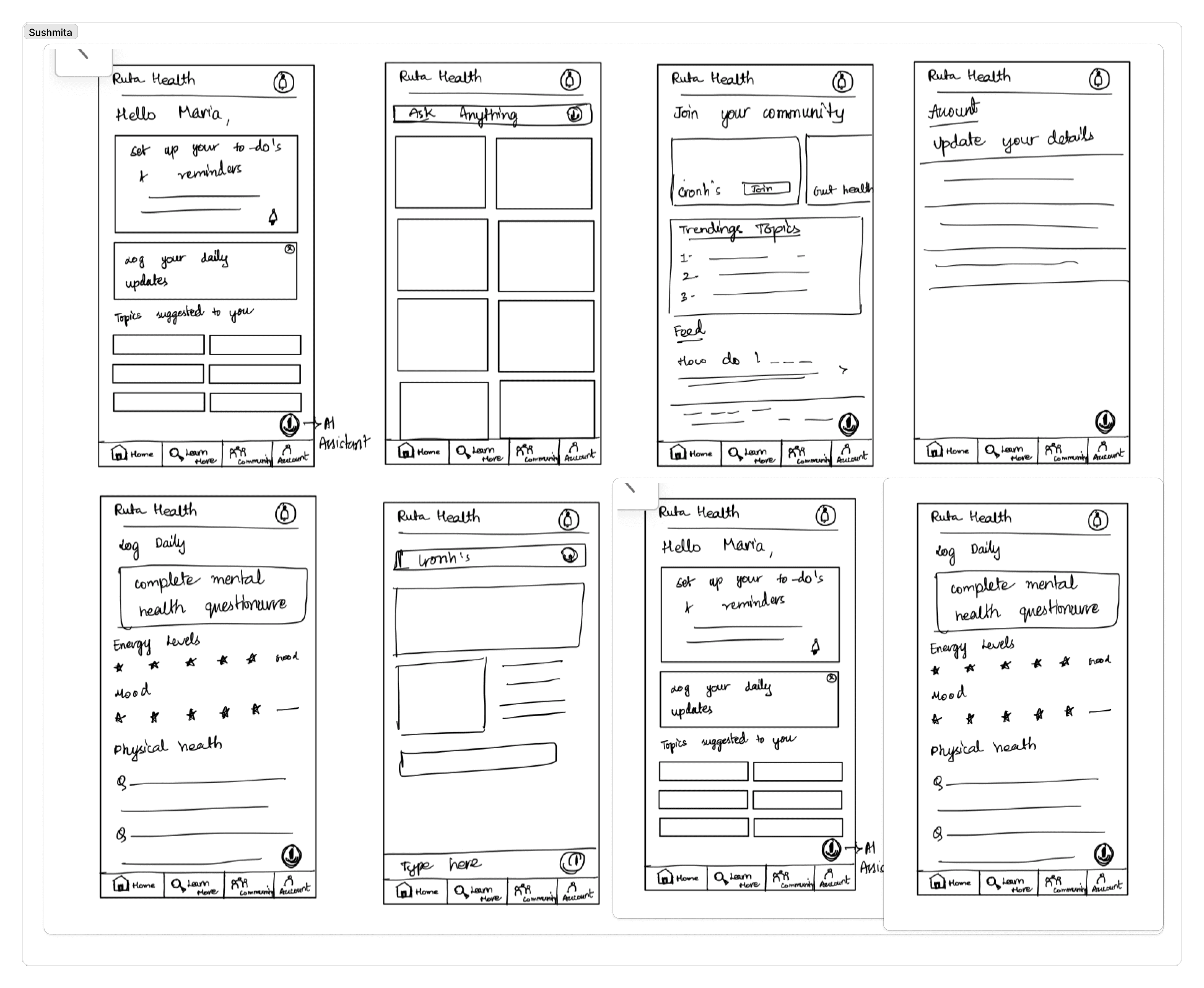
and created low-fidelity wireframes to visualize core functionalities and content placement before moving into higher-fidelity iterations.
Research
Data Collection
Data Analysis
IDeation
Approach
Primary Research
We aimed to uncover real-world pain points, motivations, and behaviors of women managing chronic and hormonal health conditions. We sought to understand how they navigate fragmented care, what kind of guidance would truly support them in managing their health holistically.
Surveys
41
Responses
12
Consented for interviews
Insights
The survey revealed that women experience significant information overload, conflicting advice, and frustration with fragmented care while managing multiple chronic conditions.
It also showed a strong desire for trustworthy, personalized, and low-effort digital tools that help them understand their health more holistically.
Interviews
13
Interviewed
4
Consented for Diary Study
Insights
The interviews revealed that women are not just looking for symptom tracking, but for clarity, validation, and a deeper understanding of the “why” behind their health patterns.
They emphasized the need for trustworthy, personalized guidance that feels empathetic, low-effort, and supportive rather than overwhelming or clinical.
DIary STudies
4
Participants
Insights
Diary studies revealed that women’s health behaviors are cyclical and closely tied to daily energy, mood, and symptom fluctuations rather than fixed routines.
They also showed that users need lightweight, contextual support that adapts to real-life disruptions instead of rigid tracking systems.
Fragmented Care Systems
Narrowly Focused Digital Tools
Trust in Data
Addressing Emotional and Social Context
THE Problem SPace
Women’s healthcare experiences are fragmented across medical, emotional, and lifestyle domains. Most digital health solutions focus on isolated symptoms or specific life stages (such as fertility or pregnancy), rather than supporting holistic, lifelong wellness. This disconnect makes it difficult for women to understand how hormonal health, mental wellbeing, chronic conditions, and daily habits intersect leaving them without accessible, integrated support.
The solution
Delivering a holistic, AI-powered women’s health platform that transforms fragmented care into a connected, empowering experience. By unifying symptom tracking, lifestyle insights, emotional support, and evidence-based guidance in one intuitive space, the app helps women move from confusion to clarity.
How does it help women?
Where Care Meets Understanding
Creating a holistic approch for women’s health that bridges fragmented care experiences by integrating medical, emotional, and lifestyle support into one accessible platform.
Timeline
8 Months
Tools Used
Figma, Adobe Creative Cloud, Google Drive, Claude
Industry
Healthcare/Tech
Team & Role
Team of 4
UX Design & Strategy
Secondary Research
We conducted a literature review of academic journals, medical publications, and credible grey literature, along with a competitive analysis of existing women’s and holistic health platforms.
Key Insights
1
Women's health should be holistically approched integrating hormonal, lifestyle, emotional, and preventive care.
2
Many digital health tools are narrowly focused on single systems (e.g., cycle, fitness, gut health), creating fragmented user experiences.
3
Trust, credibility, and transparency are critical in women’s health platforms due to widespread misinformation and systemic dismissal.
4
Technology is most effective when it translates complex medical data into simple, actionable, and personalized guidance.
Data Analysis
Analyzed quantitative survey data to identify behavioral patterns and key pain points, and conducted thematic analysis on interviews and open-ended responses to uncover deeper insights.
Thematic Analysis
Empathy Map
Affinity Mapping
Key Features based on Analysis
The analysis revealed that women struggle with fragmented care, information overload, and low motivation due to high-effort tracking tools. It highlighted a strong need for trustworthy, holistic, and low-friction support that helps them understand their health patterns rather than just track symptoms.
Want to explore the full project? I’d love to connect.
Ideation & Strategy
For the next steps in developing the platform, we focused on translating key research insights into actionable features. We also designed the navigation flow to ensure clarity and intuitive movement across the app.
The Design Journey
Features decided on
Sketches
Root-Cause Analysis
Symptom & Mood Tracking
AI-Powered Pattern Insights
Personalized Daily Routines
Progress & Trend Visualization
and created low-fidelity wireframes to visualize core functionalities and content placement before moving into higher-fidelity iterations.
Research
Data Collection
Data Analysis
IDeation
Approach
Primary Research
We aimed to uncover real-world pain points, motivations, and behaviors of women managing chronic and hormonal health conditions. We sought to understand how they navigate fragmented care, what kind of guidance would truly support them in managing their health holistically.
Surveys
41
Responses
12
Consented for interviews
Insights
The survey revealed that women experience significant information overload, conflicting advice, and frustration with fragmented care while managing multiple chronic conditions.
It also showed a strong desire for trustworthy, personalized, and low-effort digital tools that help them understand their health more holistically.
Interviews
13
Interviewed
4
Consented for Diary Study
Insights
The interviews revealed that women are not just looking for symptom tracking, but for clarity, validation, and a deeper understanding of the “why” behind their health patterns.
They emphasized the need for trustworthy, personalized guidance that feels empathetic, low-effort, and supportive rather than overwhelming or clinical.
DIary STudies
4
Participants
Insights
Diary studies revealed that women’s health behaviors are cyclical and closely tied to daily energy, mood, and symptom fluctuations rather than fixed routines.
They also showed that users need lightweight, contextual support that adapts to real-life disruptions instead of rigid tracking systems.
Fragmented Care Systems
Narrowly Focused Digital Tools
Trust in Data
Addressing Emotional and Social Context
THE Problem SPace
Women’s healthcare experiences are fragmented across medical, emotional, and lifestyle domains. Most digital health solutions focus on isolated symptoms or specific life stages (such as fertility or pregnancy), rather than supporting holistic, lifelong wellness. This disconnect makes it difficult for women to understand how hormonal health, mental wellbeing, chronic conditions, and daily habits intersect leaving them without accessible, integrated support.
The solution
Delivering a holistic, AI-powered women’s health platform that transforms fragmented care into a connected, empowering experience. By unifying symptom tracking, lifestyle insights, emotional support, and evidence-based guidance in one intuitive space, the app helps women move from confusion to clarity.
How does it help women?
Where Care Meets Understanding
Creating a holistic approch for women’s health that bridges fragmented care experiences by integrating medical, emotional, and lifestyle support into one accessible platform.
Timeline
8 Months
Tools Used
Figma, Adobe Creative Cloud, Google Drive, Claude
Industry
Healthcare/Tech
Team & Role
Team of 4
UX Design & Strategy
Secondary Research
We conducted a literature review of academic journals, medical publications, and credible grey literature, along with a competitive analysis of existing women’s and holistic health platforms.
Key Insights
1
Women's health should be holistically approched integrating hormonal, lifestyle, emotional, and preventive care.
2
Many digital health tools are narrowly focused on single systems (e.g., cycle, fitness, gut health), creating fragmented user experiences.
3
Trust, credibility, and transparency are critical in women’s health platforms due to widespread misinformation and systemic dismissal.
4
Technology is most effective when it translates complex medical data into simple, actionable, and personalized guidance.
Data Analysis
Analyzed quantitative survey data to identify behavioral patterns and key pain points, and conducted thematic analysis on interviews and open-ended responses to uncover deeper insights.
Thematic Analysis
Empathy Map
Affinity Mapping
Key Features based on Analysis
The analysis revealed that women struggle with fragmented care, information overload, and low motivation due to high-effort tracking tools. It highlighted a strong need for trustworthy, holistic, and low-friction support that helps them understand their health patterns rather than just track symptoms.
Want to explore the full project? I’d love to connect.
Ideation & Strategy
For the next steps in developing the platform, we focused on translating key research insights into actionable features. We also designed the navigation flow to ensure clarity and intuitive movement across the app.
The Design Journey
Features decided on
Sketches
Root-Cause Analysis
Symptom & Mood Tracking
AI-Powered Pattern Insights
Personalized Daily Routines
Progress & Trend Visualization
and created low-fidelity wireframes to visualize core functionalities and content placement before moving into higher-fidelity iterations.